
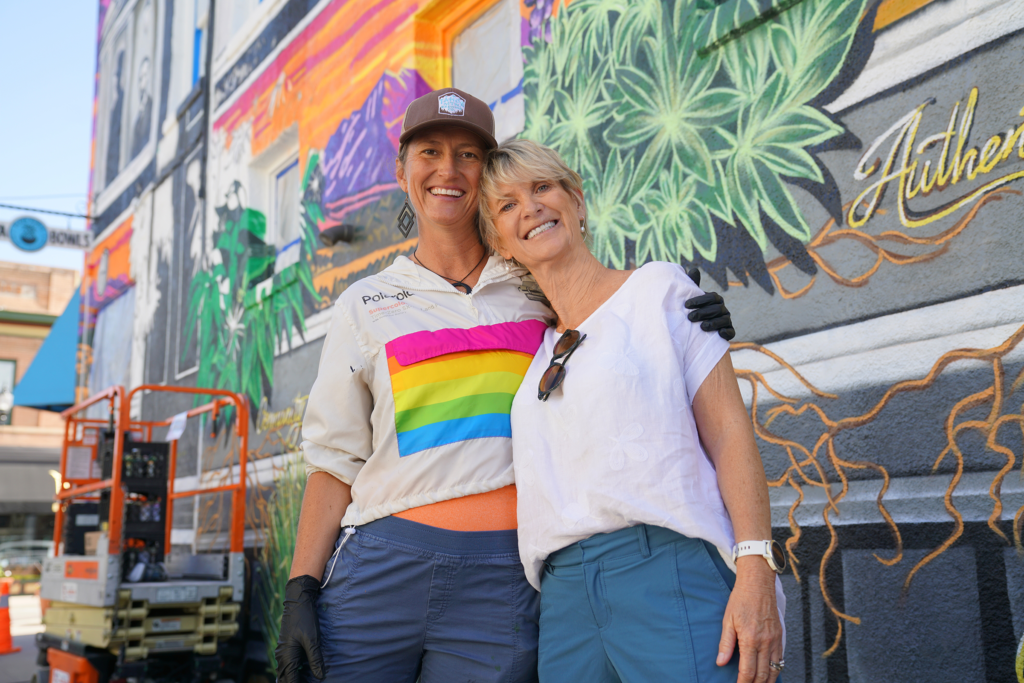
Downtown Littleton has a colorful new addition—and it’s more than just a mural.
The Littleton Downtown Development Authority (LDDA) is proud to celebrate the completion of Those That Carried Us Here, a large-scale public artwork by Littleton artist Katy Casper and the first major installation in the organization’s new Downtown Public Art Program.
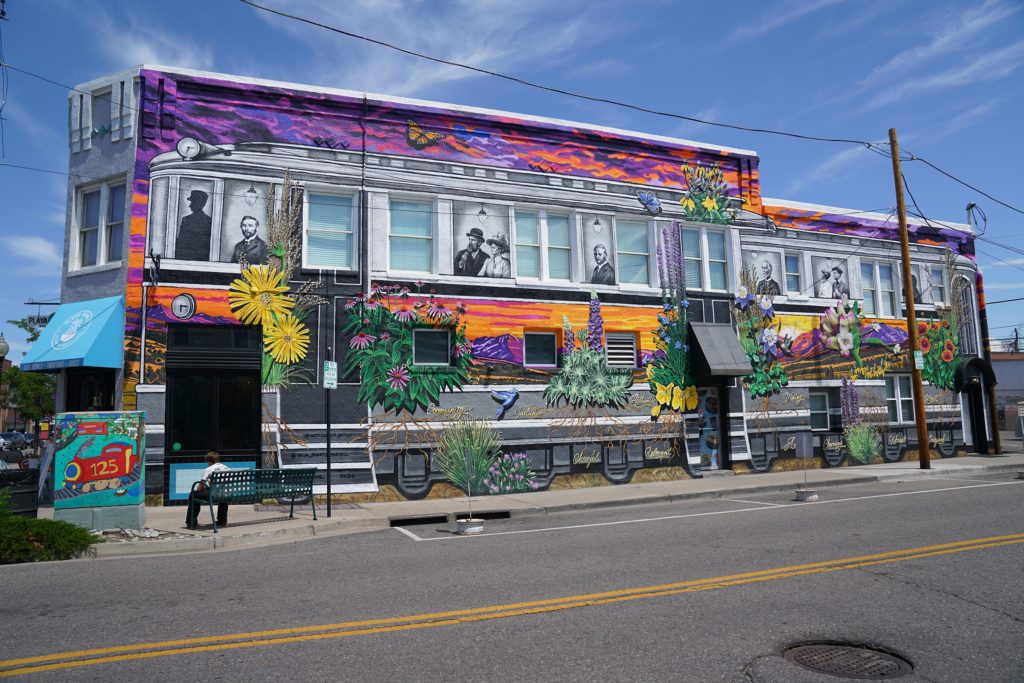
Located on the west-facing wall of the building at 2490 Main Street, the approximately 2,420-square-foot mural transforms a historic downtown building into a vibrant tribute to the people, landscapes, and community spirit that have helped shape Littleton over generations.
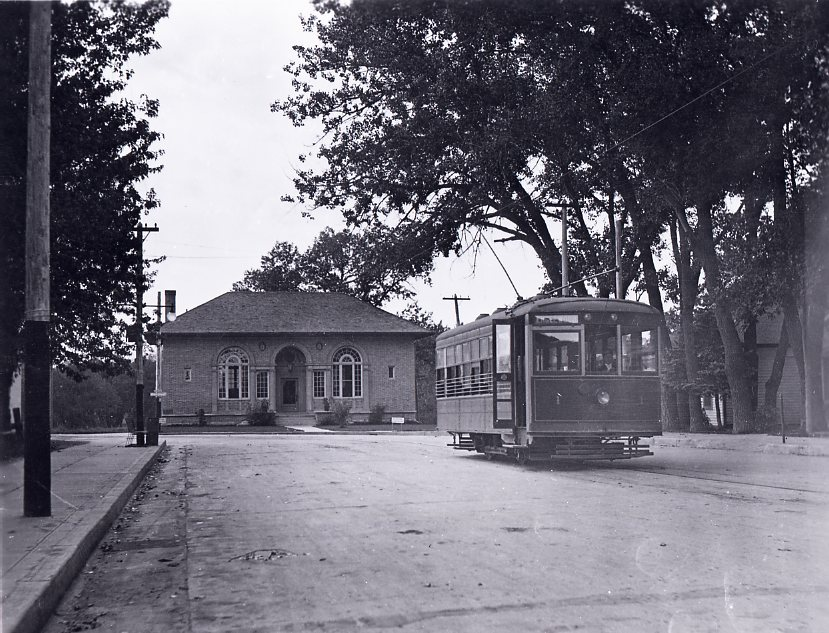
(Photo courtesy of Littleton Public Library)
A Trolley Through Littleton’s Story
Selected through a competitive public process, Casper’s design reimagines the building as a vintage Littleton trolley traveling through time, memory, and community identity.
Inspired by the electric trolley that once traveled along Main Street, the mural incorporates the building’s existing windows and architectural features directly into the artwork, allowing the structure itself to become part of the story.
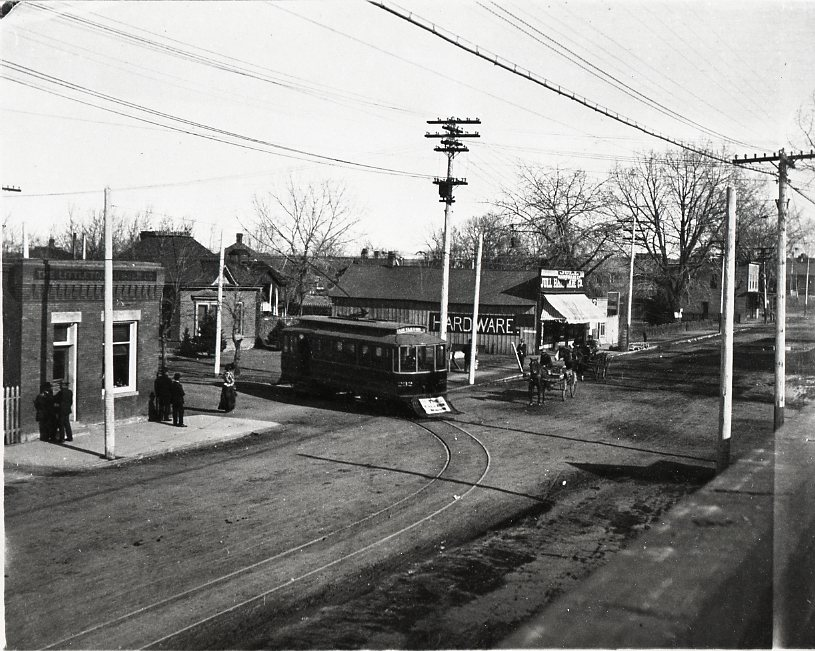
(Photo courtesy of Littleton Public Library)
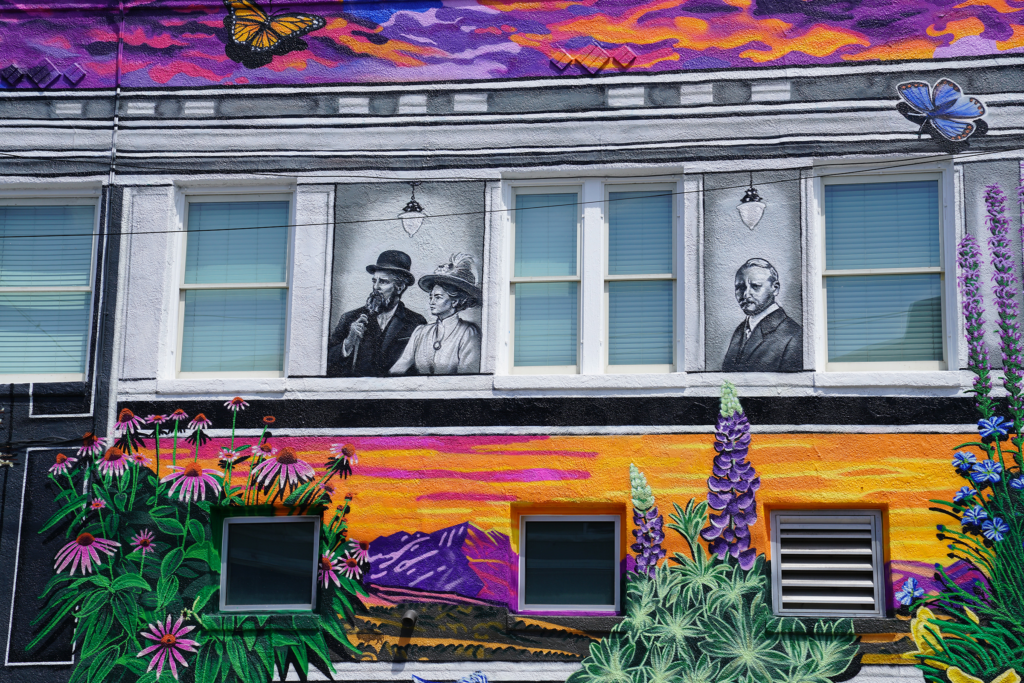
At the center of the piece is a black-and-white trolley car carrying notable figures from Littleton’s past, including:
- Dr. Walter C. Crysler, longtime physician, mayor, and civic leader
- Richard and Angeline Little, founders of the community that became Littleton
- Architect J.J.B. Benedict, whose work helped define the character of Downtown Littleton
- Joseph Bowles, pioneering rancher, businessman, and irrigation advocate
- Elizabeth and Fred Bemis, influential agricultural and civic leaders whose legacy helped shape Colorado’s cattle industry and the National Western Stock Show
Together, these historic figures represent the visionaries, builders, and community leaders who helped create the Littleton we know today.
Rooted in Place
Surrounding the trolley are sweeping scenes inspired by Colorado’s foothills and prairie landscapes, woven together with native plants including Rocky Mountain columbine, blanket flower, echinacea, lupine, and native grasses.
Wildlife, pollinators, and flowing organic forms connect the mural’s historical elements to the natural environment that continues to define the region.
“I wanted this mural to honor the people, landscapes, and stories that helped shape Littleton while creating something that feels alive and relevant today,” said Casper. “By combining historic figures, native plants, and community-sourced words, I hope the piece invites people to see themselves as part of Littleton’s ongoing story.”
A Community-Created Piece
One of the mural’s most meaningful elements comes directly from the community itself.
Earlier this spring, residents were invited to participate in a public engagement campaign and submit words that describe Littleton. Selected words—including Authentic, Charming, Inclusive, Vibrant, Heart, and Original—were incorporated into the artwork and embedded within root systems beneath the trolley.
The words serve as a reminder that Littleton’s identity is not only shaped by its history, but also by the people who continue to live, work, create, and build community here today.
The Beginning of a Bigger Vision
The mural marks the launch of LDDA’s broader vision to expand public art throughout Downtown Littleton in the years ahead.
“This mural represents the first major installation in the DDA’s vision to expand public art throughout Downtown Littleton,” said Jenny Starkey, Executive Director of the Littleton Downtown Development Authority. “Public art does more than beautify a space—it creates connection, sparks curiosity, celebrates local creativity, and transforms everyday places into meaningful experiences. We’re proud to launch our Downtown Public Art program with a project that honors Littleton’s history while helping shape its future.”
(2490 Main Street Before Mural Installation)
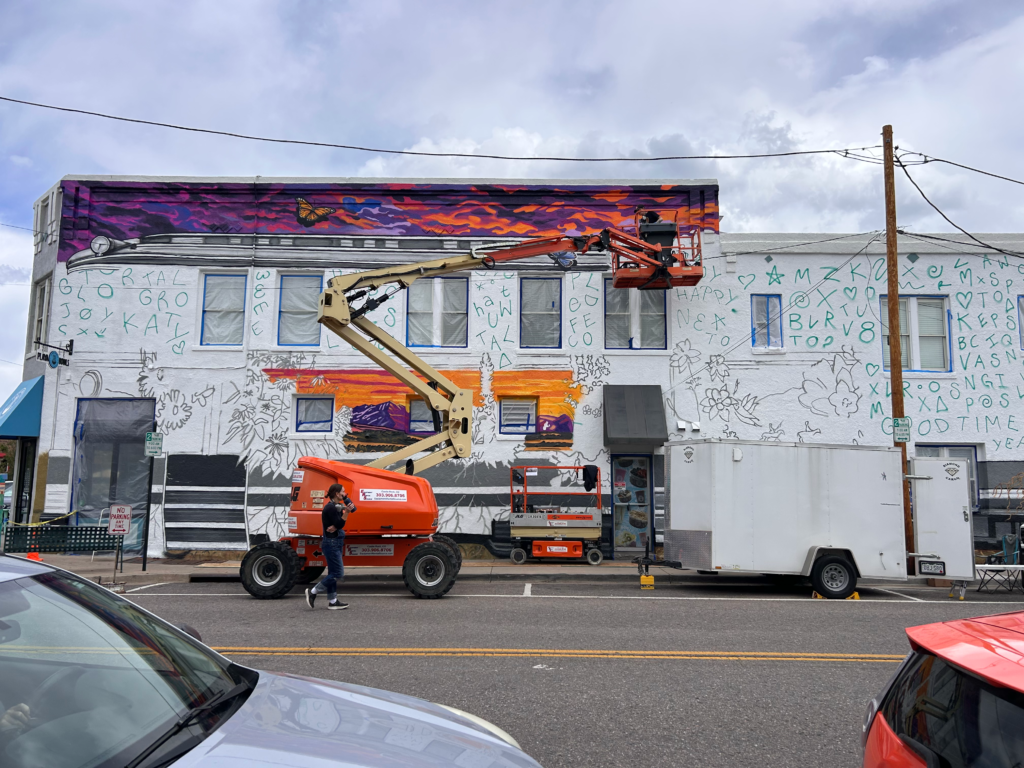
(Mural in progress)
Krista Falkenstine, artist, LDDA Board Member, and member of the mural selection committee, said the project reflects the power of public art to bring people together.
“Public art has the power to create connection and spark curiosity,” Falkenstine said. “This mural celebrates Littleton’s unique identity while adding a vibrant new landmark to Downtown, and we’re excited for residents and visitors to experience it for years to come.”
A Collaborative Effort
The project was made possible through a partnership between the Littleton Downtown Development Authority, property owners David and Michelle Coe, and funding support from a City of Littleton Arts & Culture Grant.
To help preserve the artwork for years to come, the mural has been protected with an anti-graffiti coating.
Next time you’re strolling along Main Street, take a moment to visit Those That Carried Us Here. Look closely, explore the details, and see how many stories—and community words—you can find woven throughout the piece.
Littleton’s story is still being written, and we’re all part of it.
Want to see more?
Watch our making of the mural video here.

Those That Carried Us Here transforms the historic building façade into a vintage Littleton trolley moving through time, memory, landscape, and community identity. The mural uses the architecture of the building itself – its windows, doors, cornice lines, vertical divisions, and lower panels – as the structural framework for the trolley. Rather than covering the building, the artwork works with it, allowing the existing façade to become part of the story.
The black-and-white trolley anchors the composition as a symbol of movement, connection, and shared history. Within its windows are several notable figures from Littleton’s early and developmental years, arranged as passengers traveling together through the community’s layered past. These include a trolley conductor, Dr. Walter C. Crysler, Richard and Angeline Little, architect J.J.K. Benedict, Joseph Bowles, Fred and Elizabeth Bemis, and Edwin Bemis. Their monochromatic treatment gives them a historic, archival quality while allowing the surrounding color to represent the living, evolving present.
Each figure reflects a different piece of Littleton’s story. Dr. Walter C. Crysler served the town for decades as a physician and civic leader. Richard and Angeline Little represent the founding history of Littleton. J.J.K. Benedict connects the mural to the city’s architectural legacy, including important civic and cultural buildings. Joseph Bowles represents early land ownership, ranching, farming, and business development. Fred and Elizabeth Bemis connect to cattle ranching, agriculture, and the establishment of the National Western Stock Show. Edwin Bemis represents Littleton’s civic and newspaper history. Together, these figures suggest that place is shaped by many kinds of labor – care, settlement, architecture, agriculture, leadership, storytelling, and public service.
The landscape panels below and around the trolley windows open into Colorado’s foothills, plains, and dramatic sunset skies. These glowing landscapes create warmth and depth while placing the mural firmly within the Front Range. Within the landscape scenes are subtle silhouettes of Indigenous riders and buffalo, acknowledging that this land holds a much deeper history than Littleton’s settlement era. These figures are intentionally quiet and atmospheric rather than literal portraits, serving as a respectful visual recognition of the Indigenous peoples who lived in and moved through this region long before the town was established. The buffalo further connect the mural to the ecology and lifeways of the plains, representing abundance, movement, interdependence, and the long relationship between people, animals, and land. The sunset serves as a visual bridge between past and present, bathing the historic trolley in contemporary color and inviting viewers to experience the scene as both memory and living place.
Native and regionally appropriate plants grow through the landscape panels and up the trolley, creating the sense that ecology and history are intertwined. Species represented include Rocky Mountain columbine, echinacea, silvery lupine, blanket flower, blue flax, blue grama grass, little bluestem, spotted gayfeather, yellow prairie coneflower, evening primrose, showy fleabane, and other prairie and foothills plants. The plants spill gently over panel edges, climb along vertical architectural lines, and bring color, movement, and vitality into the composition while still preserving the readability of the trolley and windows.
Wildlife and pollinators – including bees, butterflies, and birds – move through the mural, reinforcing the idea that Littleton is part of a living ecological system. Their upward movement adds energy and optimism, suggesting migration, pollination, renewal, and connection across generations.
Along the lower portion of the trolley, roots grow downward and outward near the wheels, symbolizing the unseen systems that hold a community together. Interwoven with the roots are the final community-sourced words: Community, Authentic, Charming, Evolving, Inclusive, Vintage, Vibrant, Cozy, Relevant, Heart, Cheerful, Alive, and Original. These words reflect how community members describe Littleton today. By placing them among the roots, the mural suggests that Littleton’s identity is not only inherited from history, but continually nourished by the people who live, work, gather, and imagine here now.
An interactive figure near the trolley steps invites viewers to imagine themselves climbing aboard. This moment turns the mural into more than a historic image – it becomes an invitation. Visitors are encouraged to place themselves within the story, becoming part of Littleton’s ongoing journey.
Overall, Those That Carried Us Here honors the people, landscapes, ecosystems, and community values that have shaped Littleton across time. It recognizes the past without freezing the city in nostalgia, acknowledges the deeper Indigenous and ecological histories of the land, celebrates the living beauty of Colorado’s native ecology, and looks forward to a vibrant, inclusive, and evolving future rooted in both history and place.